
Do Ho suh: The Weight of Home
What do we carry when we leave? Looking at Do Ho Suh at MMCA Seoul
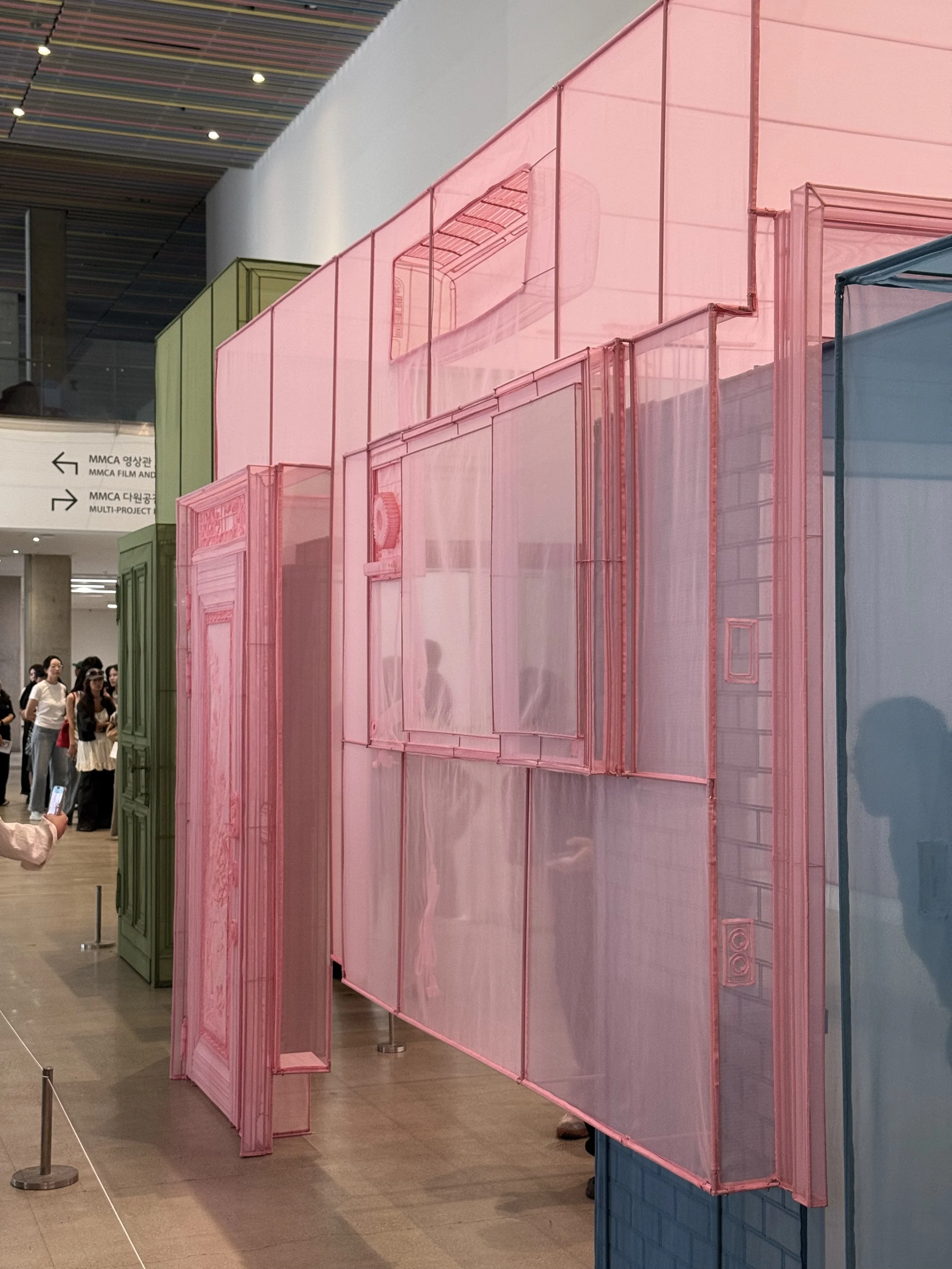
Installation view of Do Ho Suh at MMCA Seoul. Photo by Yesung Lim, Tasty Morsels Art.
There was one question I kept coming back to while walking through Do Ho Suh’s exhibition at MMCA Seoul.
Why fabric?
A house is supposed to be solid, isn’t it? Walls, doors, floors. Things that separate inside from outside and give us a sense of permanence. We often think of home as the place that holds us still.
However, Do Ho Suh reconstructs the places he has lived in something almost completely opposite - Fabric. Thin, translucent and surprisingly light.
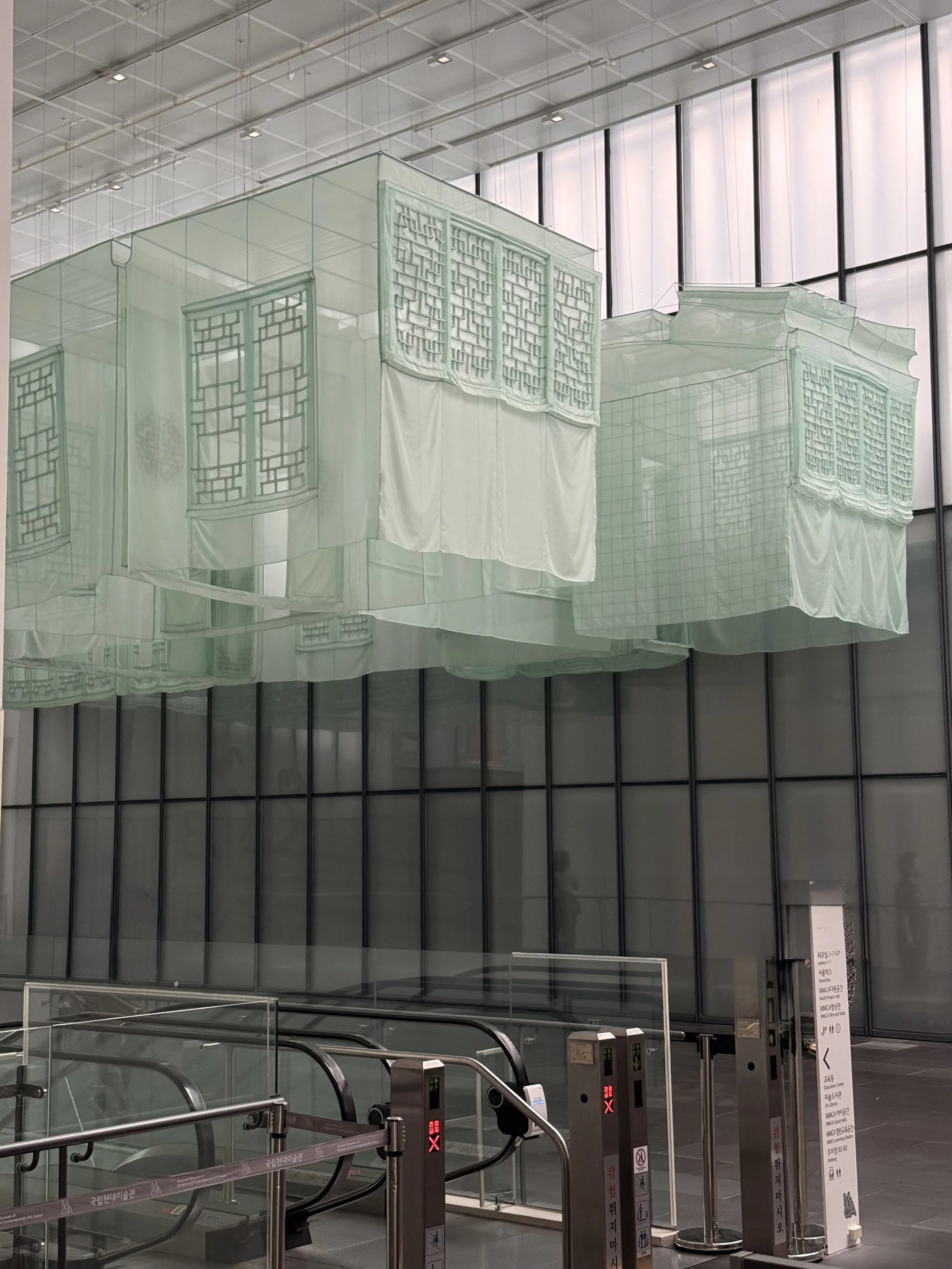
Do Ho Suh’s suspended fabric architecture at MMCA Seoul. Photo by Yesung Lim, Tasty Morsels Art.
Suspended from the ceiling, some of these architectural structures seem to float above you. At times, they feel almost ghost-like. You can see through one room into another. Walls overlap. Colors bleed softly into each other. The architecture is clearly there, but it no longer behaves like architecture.
And somehow, that feels right.
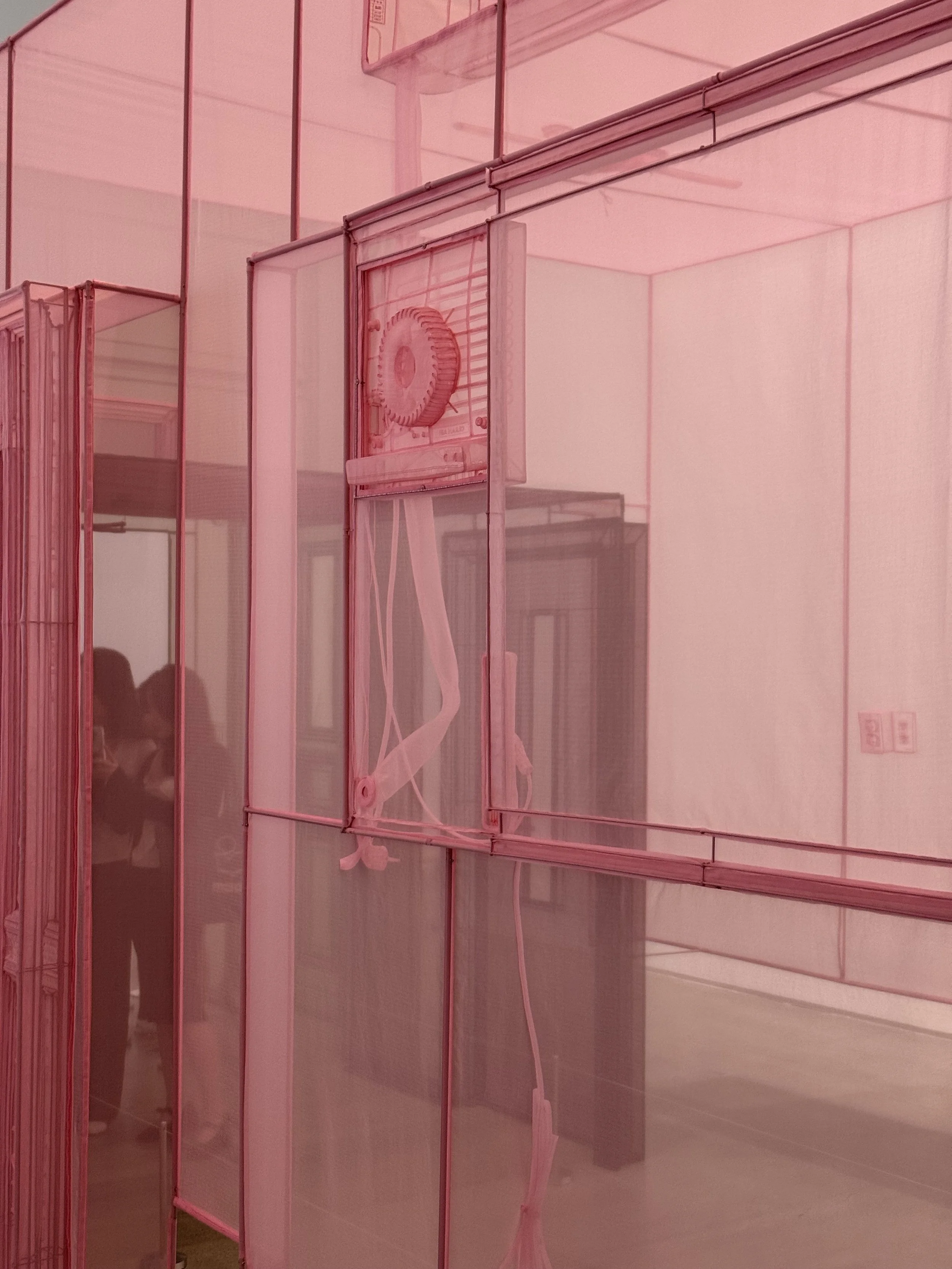
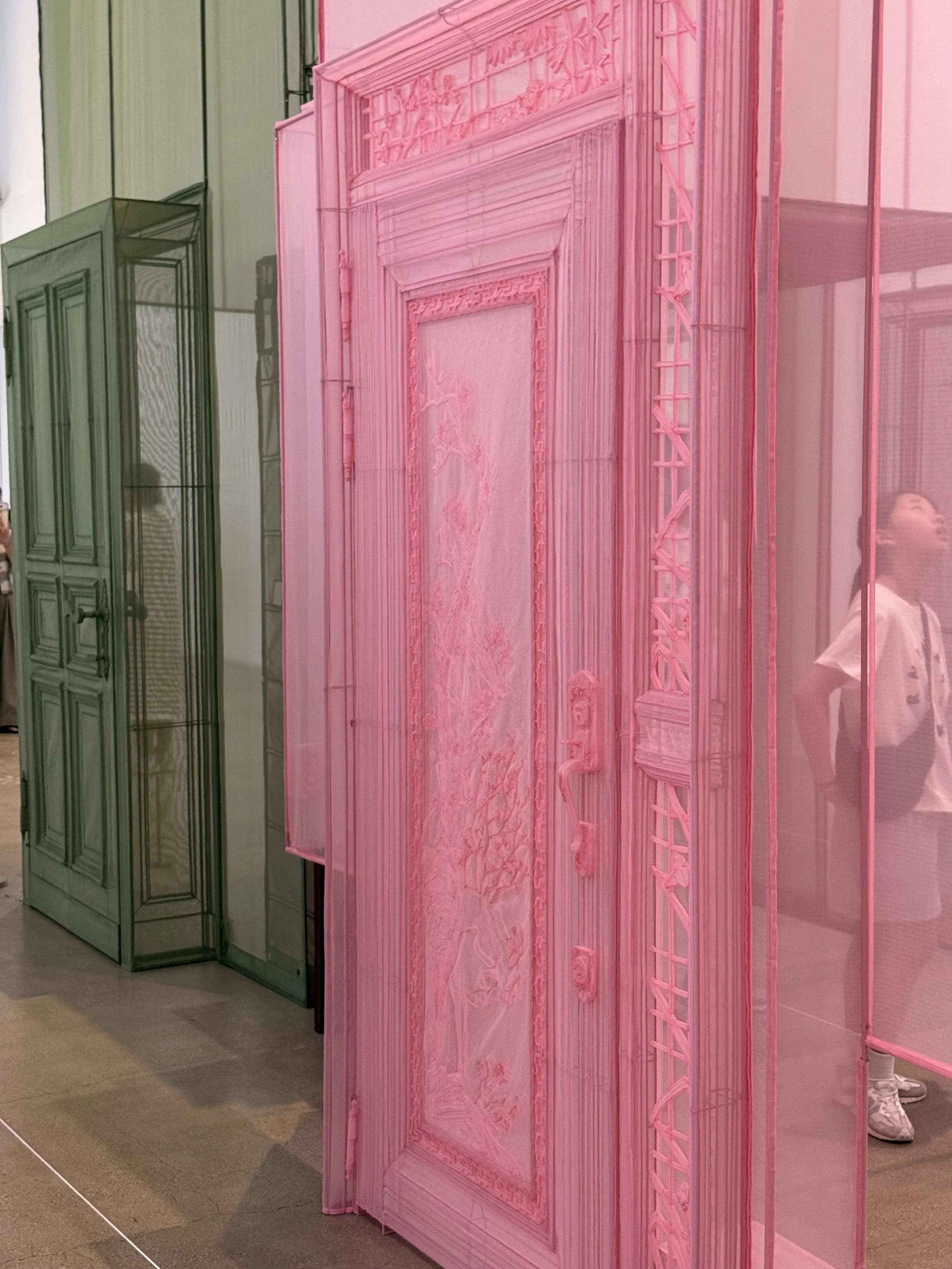
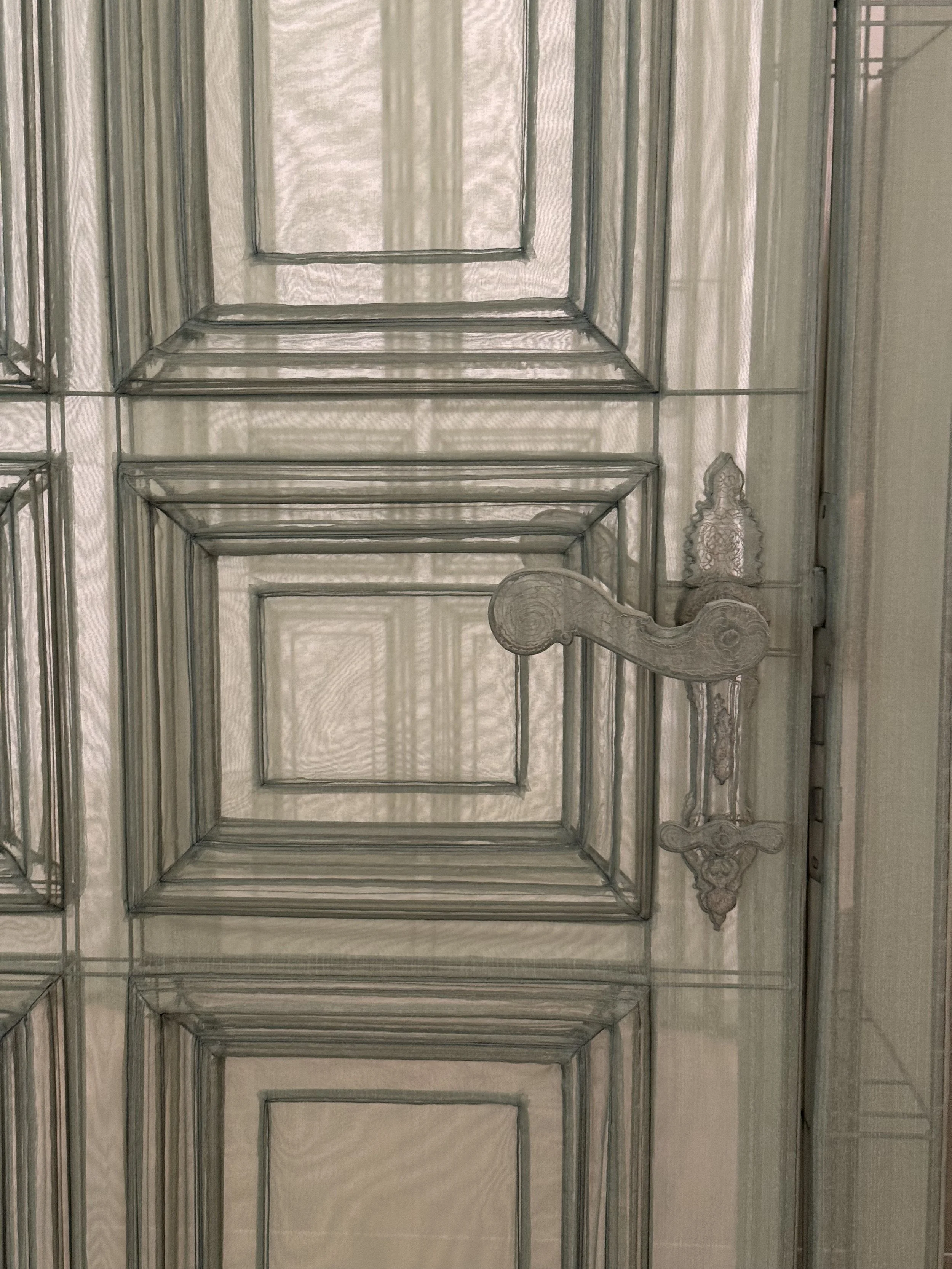
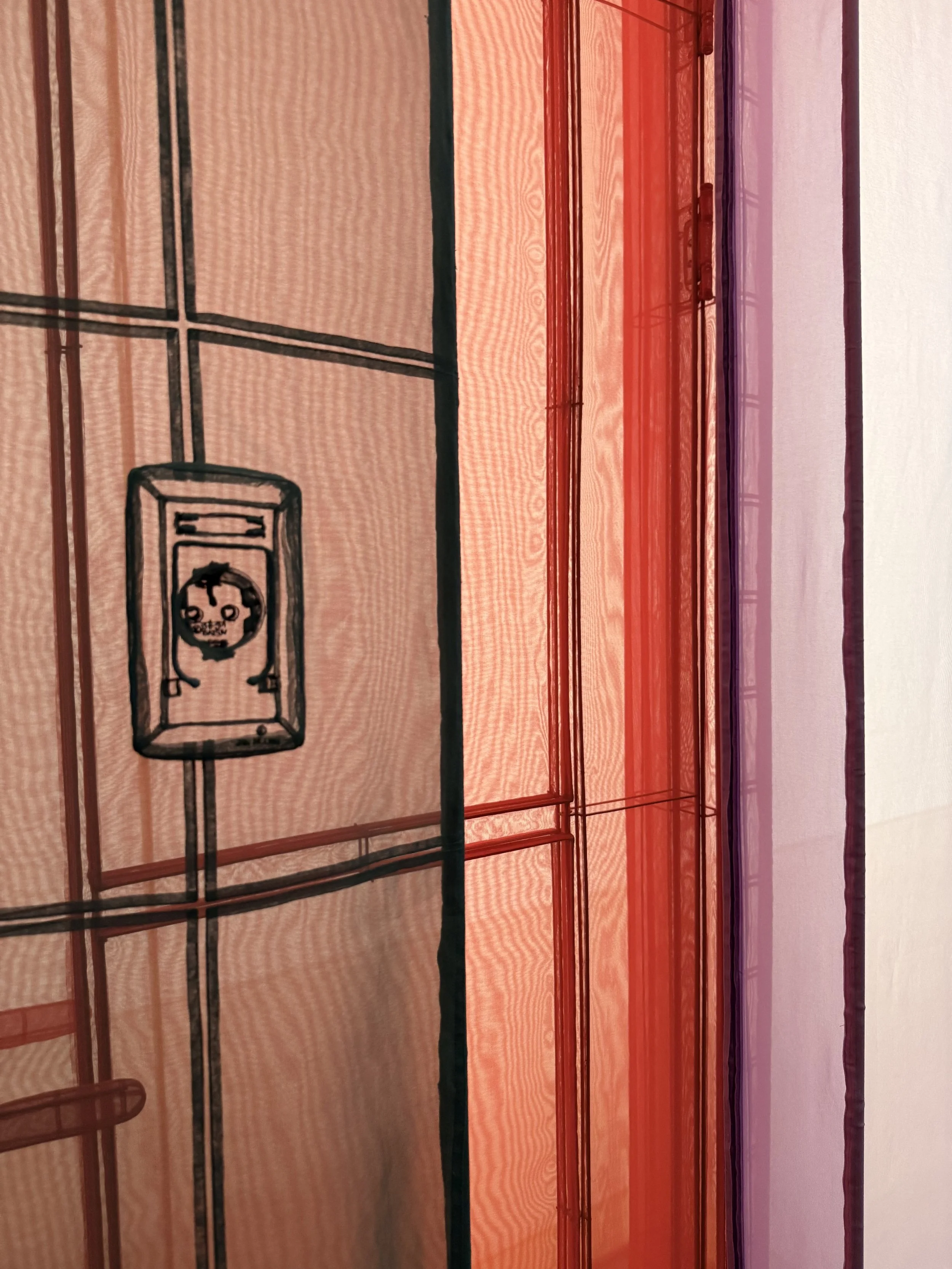
Details from Do Ho Suh’s fabric architecture at MMCA Seoul. Photos by Yesung Lim, Tasty Morsels Art.A house without its weight
The first thing you notice about Suh’s fabric works may be their beauty. The colors, the light passing through the material, the intricate stitching.
But spend a little longer with them and something stranger begins to happen.
These are not imaginary houses.
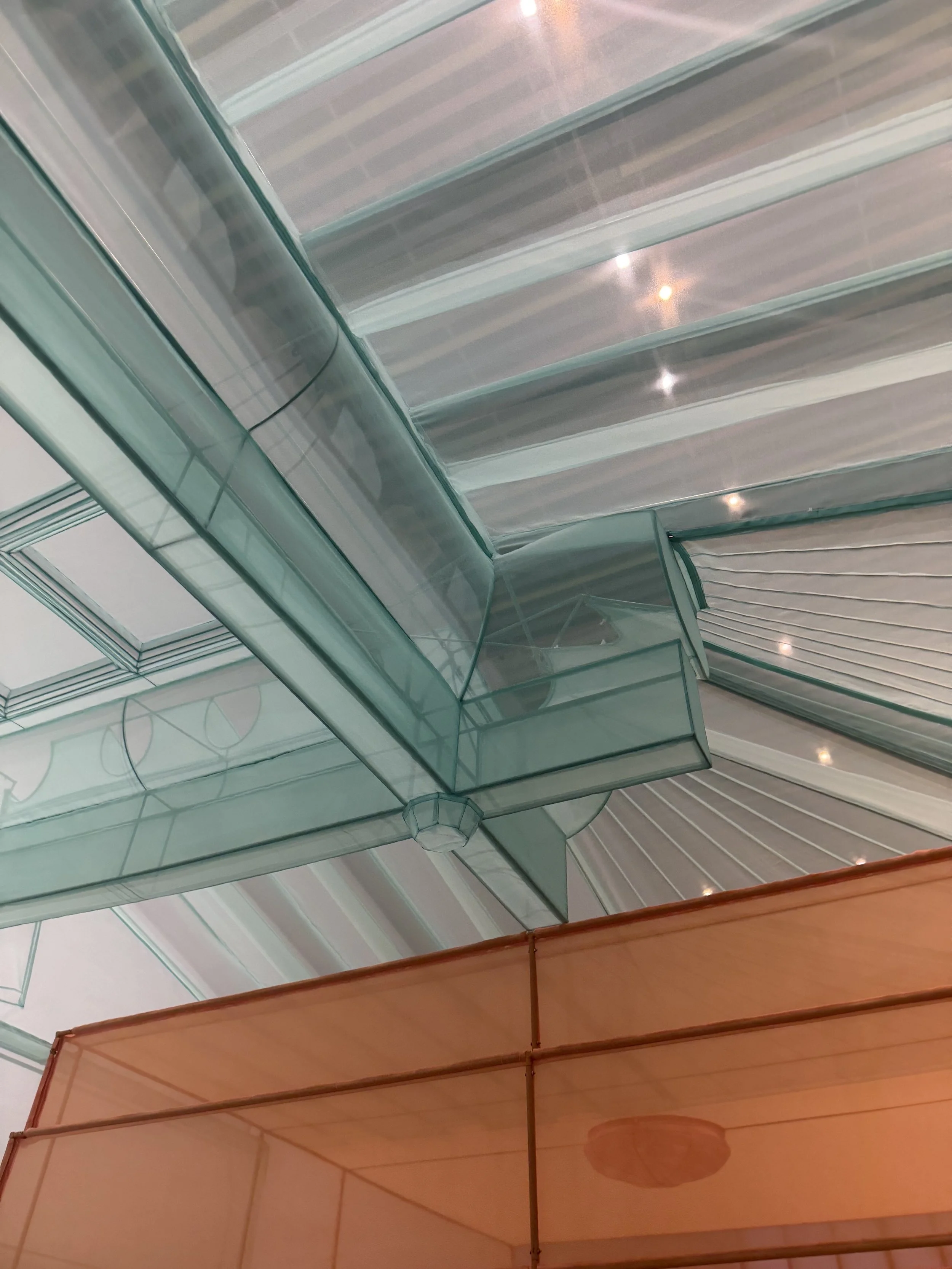
Overlapping fabric structures in Do Ho Suh’s installation at MMCA Seoul. Photo by Yesung Lim, Tasty Morsels Art.
Look closely and you find light switches, sockets, door handles, pipes, staircases and corridors. Ordinary details that would barely register while actually living in a place are reconstructed with remarkable precision.
The material feels almost immaterial, yet the memories embedded within it feel incredibly specific. It made me think about the way we remember places ourselves.
We rarely remember an entire room at once. Instead, perhaps we remember the position of a light switch. The sound of a particular door. The hallway we walked through every morning. The view from one window.
Small things that meant almost nothing at the time can become strangely important once we have left.
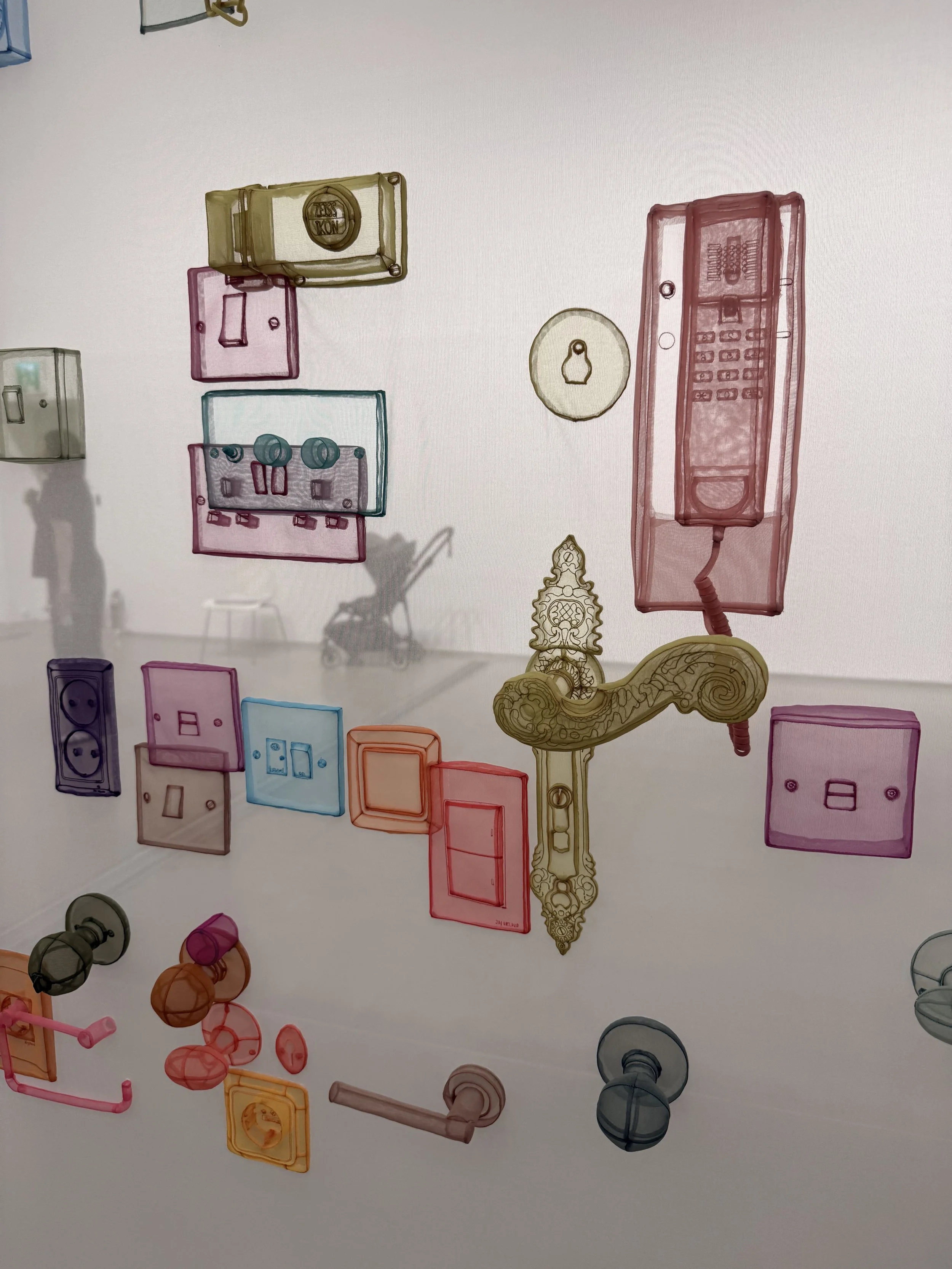
Household details reconstructed in translucent fabric in Do Ho Suh’s installation at MMCA Seoul. Photo by Yesung Lim, Tasty Morsels Art.
When home stops being one place
Do Ho Suh’s life has unfolded across different cities and cultures, and questions of movement, belonging and home have remained central to his practice.
When you stay in one place for most of your life, perhaps the idea of home feels relatively straightforward. But when you begin moving between countries, that definition can start to shift. Home might be where you were born. It might be where your family is. It might be the place where you live now. And sometimes none of those answers feels completely right.
Perhaps this is why Suh’s work felt particularly immediate to me. Having experienced life between different cultures myself, I know the strange feeling of returning to a place that is supposed to be familiar and realizing that both the place and you have changed. You may still call it home, but you no longer belong to it in quite the same way.
At some point, home stops being only a physical location. It becomes something you carry.
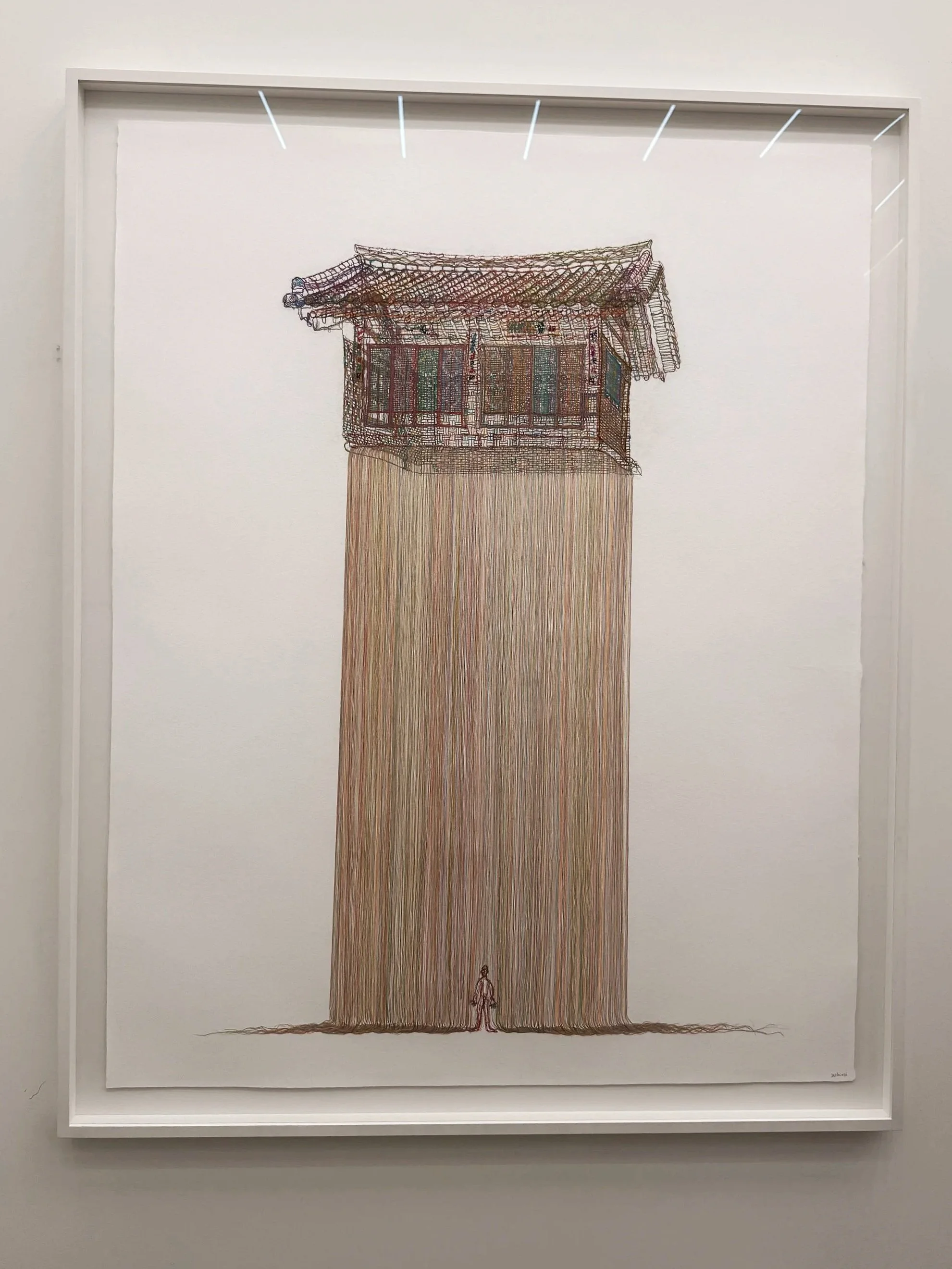
A thread drawing by Do Ho Suh, with a traditional Korean house suspended above a solitary figure. Photo by Yesung Lim, Tasty Morsels Art.
Are we remembering the place, or the memory of it?
This is where the exhibition led me to another question. When we feel nostalgic for home, what exactly are we missing? Are we remembering a place exactly as it was? Or has memory been quietly editing it for us?
Time has an interesting way of softening certain things. A place can become warmer in memory. Safer. More complete. The uncomfortable parts fade while particular moments grow brighter. Eventually, the home we carry in our minds may be quite different from the one that actually existed.
Maybe that is why Suh’s translucent houses feel so convincing. They are remarkably precise, but they are not solid. You can recognize the rooms, the doors and the smallest details, but you can never quite inhabit them again. In that sense, they feel a lot like memory itself. Maybe the home we miss no longer exists. Maybe it never existed exactly the way we remember it.
What, or where, is a perfect home?
Toward the end of the exhibition, a question appears: “What or where is a ‘perfect’ home”? By that point, it feels much harder to answer than it might have at the beginning. It might be a collection of rooms, people, habits, and memories accumulated over time. Some real, some reconstructed. Some belonging to places we can return to, others existing only in our minds. And that is what makes his work resonated so widely, regardless of where you grew up. You don’t have to move between countries to wonder where you belong. Even someone who has lived in the same place all their life can still ask: where do I feel most like myself? Where do I feel safe enough to be completely myself?
In that sense, home is not only about geography. It can also be kind of shelter, a place where we feel most fully ourselves. So the question in Suh’s work are not only about migration, immigration, or a younger generation living farther from home than the one before it. They are much more personal than that. They are about belonging, memory, and the places, real or imagined, where we feel we can truly be ourselves.
So before living the exhibition, I think it is worth taking a moment and asking yourself: When you think of home, what are you actually remembering? And if you could build your own perfect home from those memories, what would remain?
👀 A few ways to look the exhibition
✦ Start with the fabric
Before thinking about migration or identity, simply look at the material. Ask yourself what changes when something as solid as a house becomes transparent, foldable and portable.
✦ Get close to the ordinary things
Look for the switches, handles, sockets and fixtures. These small details tell us something about how intimately our bodies remember a place.
✦ Notice what overlaps
Look through one wall into another. Suh’s architecture rarely gives us one clean, fixed view. Rooms and structures often coexist visually, much like memories from different places can coexist in the mind.
✦ Stay with the final question
You do not need to decide immediately what your “perfect home” is. It may be more interesting to notice which place, person or detail comes to mind first.

Do Ho Suh
📍 MMCA Seoul, 30 Samcheong-ro, Jongno-gu, Seoul
📅 Aug 27, 2026 – Feb 9, 2027
SAVOR THE SHOW is Tasty Morsels Art’s ongoing series offering a way into exhibitions through close looking, personal reflection and a few questions worth carrying with you.SEE SEOUL THROUGH A DIFFERENT LENS

A good exhibition rarely ends at the museum door. Explore Seoul’s art scene with Tasty Morsels Art, or get in touch if you have something else in mind.
Have Something Elese In Mind?
Collaborations, advisory, editorial projects, etc.
